
24/7 Emergency Tree Removal Services
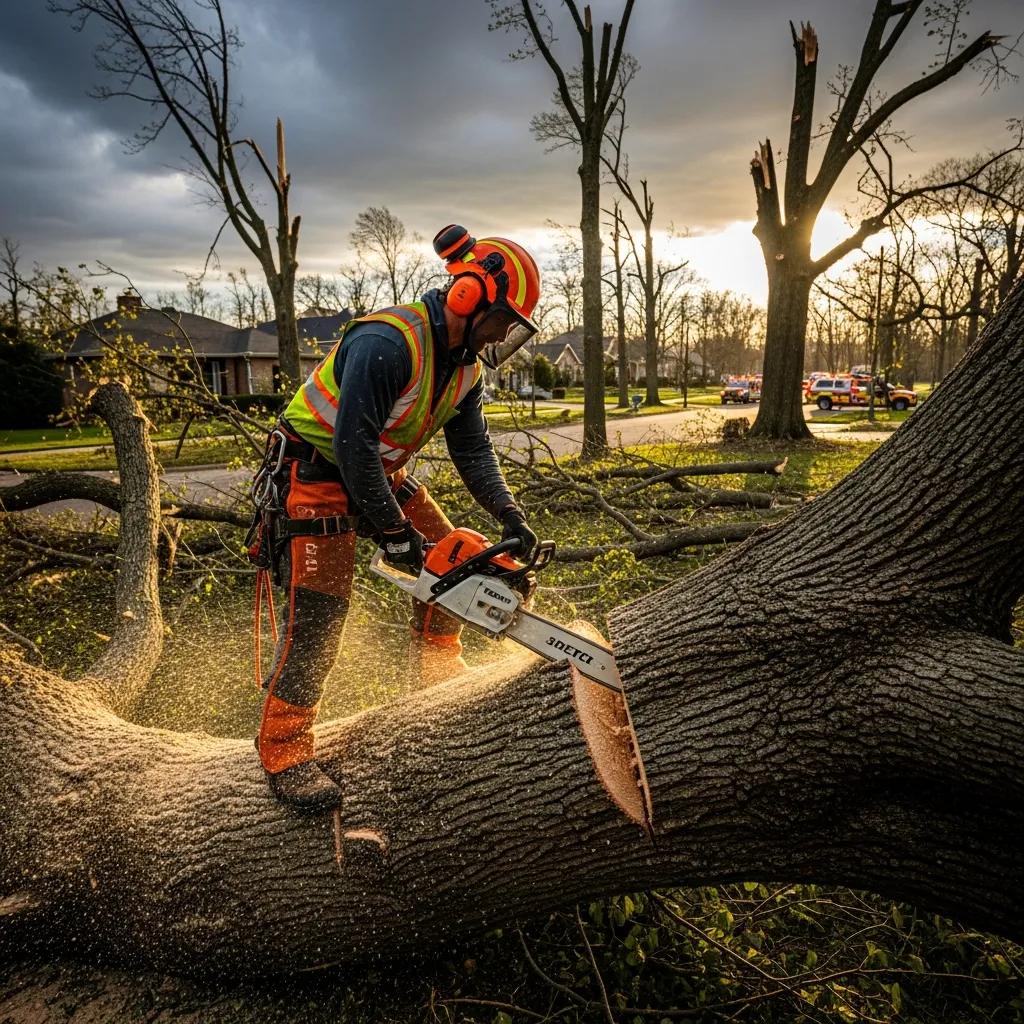
24/7 Emergency Tree Removal from Woods Forestry Solutions — Fast Storm Response and Safe, Professional Care
Severe weather can leave trees unstable, blocking roads, or threatening homes. Quick, competent action reduces risk and prevents more damage. This page outlines Woods Forestry Solutions’ 24/7 emergency tree removal: how fast we respond, what signs mean you need urgent service, our step-by-step approach, and how we help with insurance. We focus on safety first — for your property and our crew — while getting your site cleared and secure.
How quickly will Woods Forestry Solutions respond to an emergency tree removal request?
We prioritize emergency calls and aim to get a team on site as soon as conditions allow. Typically, most emergency requests are addressed within 24 hours, though exact response times depend on storm severity, location, and current call volume. Weather, access challenges, and the complexity of the job can affect arrival time. Acting quickly reduces the chance of further property damage or injury from compromised trees.
Research also underscores how much harm wind-driven tree failures can do to urban infrastructure — reinforcing why timely removal matters.
Assessing Risks of Wind-Induced Tree Failures & Infrastructure Disruption
Strong winds can cause trees to fail and create wide-ranging impacts — from damaged buildings and powerlines to disrupted roads and underground utilities. To boost community resilience before, during, and after extreme wind events, it’s important to assess how fallen trees could affect different types of infrastructure and plan prevention, response, and recovery accordingly.
Probabilistic modeling of disrupted infrastructures due to fallen trees subjected to extreme winds in urban community, G Hou, 2020
Our 24-hour availability — what to expect
We offer around-the-clock emergency service, including nights, weekends, and holidays. You can reach us by phone or through our online contact options to report storm damage and request an emergency dispatch. Once contacted, we’ll prioritize the job and keep you informed about our estimated arrival and plan of action.
When you request emergency service, have your address, a brief description of the damage, and any photos ready if possible. We may ask about access details such as locked gates, dogs on site, or visible utility lines. On arrival the crew lead will introduce themselves, conduct a rapid safety briefing, and outline the intended sequence of work so you understand timing and any entry restrictions. Typical on-site time varies with job complexity and access constraints.
Typical emergency response times in Lansing, East Lansing, and Mason, MI
Response windows vary by area and urgency. Local averages give a realistic idea of when help can arrive:
- Lansing: 1–2 hours for critical, high-risk situations
- East Lansing: 2–3 hours for moderate emergencies
- Mason: 3–4 hours for less time-sensitive cases
These timeframes help homeowners plan for interim safety measures and set expectations while our crew is en route.
While you wait, keep people and pets away from the hazard, move vehicles and valuables out of the work zone if it’s safe to do so, and mark dangerous areas with cones or tape if available. Do not attempt to cut large branches or move uprooted trees yourself — that can increase risk. These precautions reduce chances of injury and let crews begin work immediately on arrival.
Signs you need urgent tree cutting after storm damage
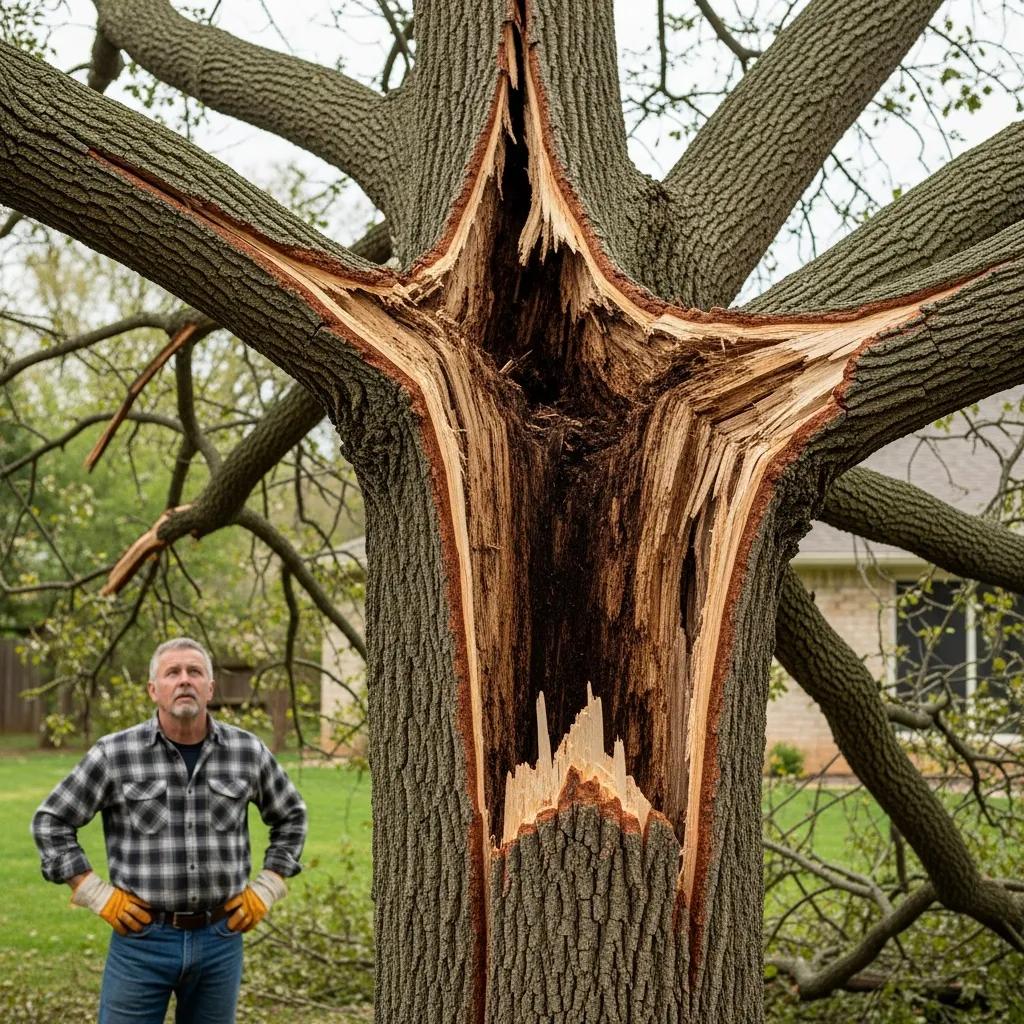
Knowing the warning signs can prevent accidents. Call for emergency removal if you see any of the following:
- Visible structural damage: Large cracks, splits, or broken limbs on the trunk.
- Noticeable leaning: Trees that have shifted or are tilting toward a house, vehicle, or power line.
- Partially fallen limbs: Big branches hanging or caught in other trees — they can drop without warning.
When in doubt, contact a certified arborist to evaluate the risk — it’s worth a professional look.
How we identify hazardous trees and storm damage risks
After a storm we evaluate trees for hazards that could cause future problems. Key risk indicators include:
- Root instability: Uprooted or loosened roots that threaten the tree’s stability.
- Decay and disease: Rot or pests that compromise structural integrity.
- Overhanging limbs: Branches too close to power lines, roofs, or other structures.
Thorough assessments help determine whether removal, partial pruning, or monitoring is the best option.
When to call an emergency arborist near me
Contact an emergency arborist if you encounter any of the following:
- Major storm damage: Trees with significant breaks or that pose immediate danger.
- Clear threats: Trees leaning toward people, homes, or utility lines.
- Uncertainty: If you’re unsure how severe the risk is — let a pro inspect it.
Emergency arborists have the training and equipment to assess hazards and act safely.
Our emergency tree removal process — step by step
We follow a clear sequence to keep operations safe and efficient:
- Initial assessment: On-site evaluation to determine hazards and plan the safest removal method.
- Safety setup: Secure the work area, establish exclusion zones, and put safety measures in place.
- Controlled removal: Use trained crews and proper rigging or machinery to take down the tree in sections.
- Site cleanup: Remove debris, chip where appropriate, and leave the area safe and tidy.
This structured approach reduces risk and speeds up recovery for your property.
Initial storm damage assessment and safety protocols
During the first inspection we identify immediate dangers and pick techniques that protect people and property. Standard safety measures include:
- Personal protective equipment (PPE): Hard hats, eye and ear protection, chainsaw chaps, and more.
- Site safety checks: Confirming fall zones, power-line risks, and access for machinery.
- Emergency procedures: A clear plan for injuries, unexpected shifts, or changing conditions.
Safety is the guiding principle for every decision on site.
Equipment and techniques we use for safe removal
We pair experienced crews with the right tools for each situation. Common equipment includes:
- Chainsaws: For precision cutting and sectioning.
- Cranes and lifts: To safely remove large or awkward tree sections over structures.
- Chippers and hauling equipment: For efficient debris processing and removal.
Choosing the correct gear and technique keeps the project safe and controlled.
How we support insurance claims for emergency tree removal
Navigating insurance after storm damage is stressful. We help by:
- Documenting damage: Taking photos and notes to support your claim.
- Communicating with insurers: When needed, we provide job details or contractor reports to your adjuster.
- Advising on coverage: Guiding you on what documentation insurers commonly request.
Our goal is to make the claims process clearer and less burdensome for you.
For insurance purposes we can supply time-stamped photos, written estimates, and an itemized invoice once work is complete. When requested, we will prepare a contractor report summarizing the hazard, the methods used, and the work performed. Keeping copies of estimates, receipts, and correspondence with adjusters typically speeds reviews and clarifies scope and costs.
How to file an insurance claim for storm-damaged tree removal
Follow these steps to speed up your claim:
- Document the damage: Photograph the tree, the affected area, and any property damage.
- Contact your insurer: Report the loss promptly and ask about required documentation.
- Submit requested information: Provide photos, receipts, and any contractor estimates or reports.
Clear records and prompt notification usually help claims move smoother.
After filing, expect that an adjuster may visit to inspect damage. Share our documentation and be prepared to describe prior maintenance, immediate safety steps you took, and any observed pre-existing issues. If follow-up documentation is needed, we can provide additional photos or an expanded report to support the claim.
Common questions about costs and insurance coverage
Here are the main factors homeowners ask about:
- Cost drivers: Tree size, location, proximity to structures, and removal complexity affect pricing.
- Insurance coverage: Many policies cover hazardous removals or trees that fall on structures — check your policy for specifics.
- Payment options: We offer multiple payment methods and can discuss options when you call.
Knowing these factors helps you budget and plan after a storm.
Which safety measures and certifications ensure professional emergency tree removal?
Professional standards and training matter. We maintain:
- Certified arborists: Our staff are trained and credentialed in tree care and risk assessment.
- OSHA-aligned procedures: We follow workplace safety guidelines to protect crews and clients.
- Ongoing training: Regular coaching keeps our teams current on best practices and new techniques.
These measures reduce risk and ensure work is done to industry standards.
The role of certified arborists and OSHA compliance in emergency services
Certified arborists bring the experience to choose the right methods and manage risk. Their qualifications support:
- Correct techniques: Removing trees safely and efficiently with minimal collateral damage.
- Accurate risk assessments: Identifying threats not obvious to an untrained eye.
- Regulatory compliance: Following safety regulations to protect everyone on site.
Professional oversight matters most when conditions are hazardous.
Safety checklists for urgent tree removal operations
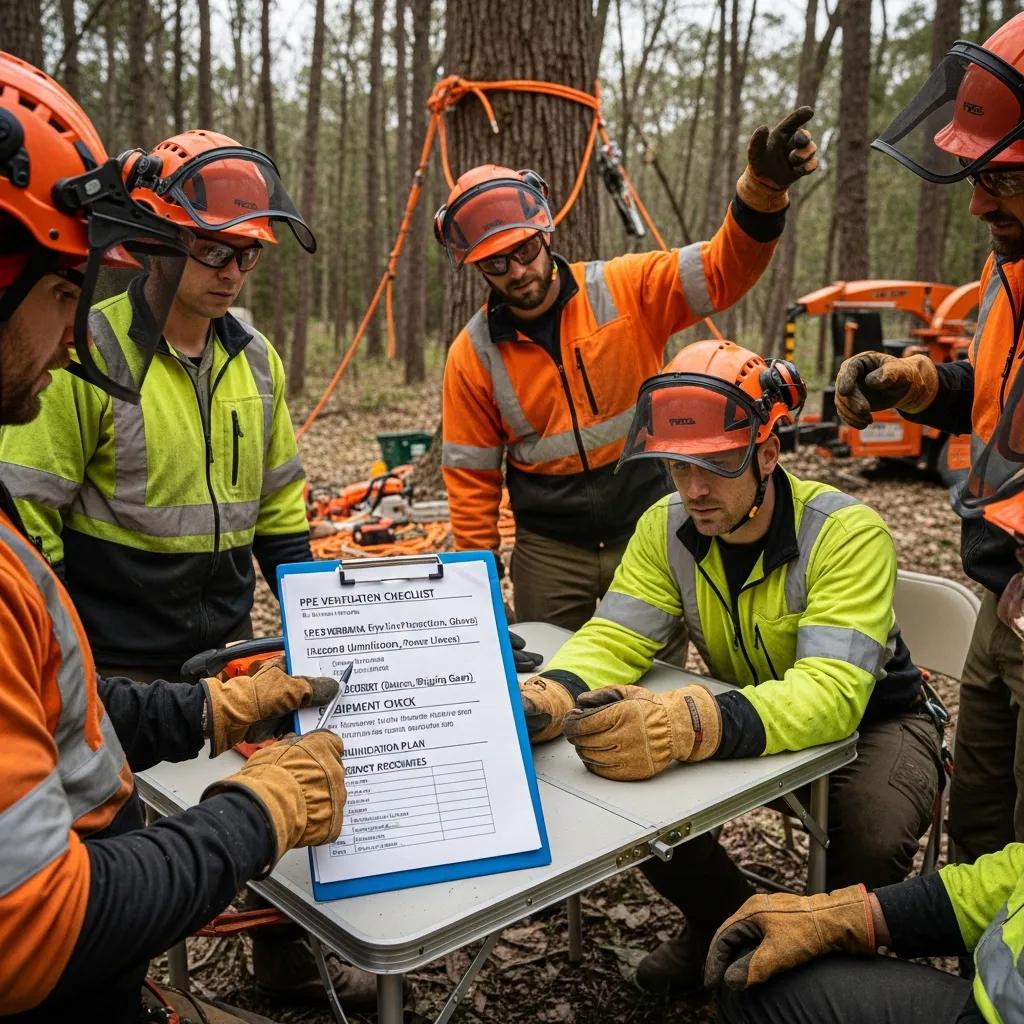
We use checklists to ensure consistency and safety. Typical items include:
- PPE verification: Confirming each crew member has the required protective gear.
- Site assessment: Re-checking hazards, fall zones, and access before work begins.
- Emergency protocols: Reviewing communication plans and first-aid procedures.
Checklists help us run a safe, predictable operation even in fast-moving emergencies.
Regional service areas and specialized emergency options
We serve a range of communities with services tailored to local needs:
- Lansing: Rapid urban response for hazardous trees and storm cleanup.
- East Lansing: Solutions for both residential and commercial properties with quick turnaround.
- Mason: Expertise in rural and semi-rural tree management and removal.
Local knowledge lets us match resources and techniques to each neighborhood’s challenges.
Emergency tree removal services in Lansing, East Lansing, and Mason, MI
Across these areas we provide:
- 24/7 availability: Around-the-clock response for urgent calls.
- Expert assessments: Professional evaluations to determine the safest, most efficient solution.
- Safe removal techniques: Trained crews using appropriate equipment for each situation.
Residents can rely on our local teams to respond professionally and promptly.
Customized solutions for local storm damage challenges
No two storms are the same. We build response plans that reflect local risks and conditions, including:
- Localized risk assessment: Identifying neighborhood-specific hazards.
- Targeted response plans: Deploying the right equipment and crew size for the job.
- Community coordination: Working with local authorities when broader recovery efforts are needed.
Tailored plans make recovery faster and more effective.
How we use advanced equipment for efficient emergency removal
Investing in the right machinery keeps work safer and faster. Our key tools include:
- High-performance chainsaws: For accurate cutting and efficient sectioning.
- Cranes and lifts: To remove heavy or hard-to-reach sections without risking structures below.
- Debris management tools: Chippers and hauling equipment to clear the site quickly.
Smart equipment plus trained operators equals a safer, quicker resolution.
When appropriate we chip limbs on site, haul debris to approved disposal locations, or arrange for wood recycling and firewood processing. Disposal options depend on local regulations and homeowner preference; we can explain typical choices and include disposal on the final estimate.
Chainsaws, cranes, and modern tools in rapid tree cutting
Modern tools let us work precisely and reduce on-site risk. Benefits include:
- Precision cutting: Safer sectioning when space is tight.
- Lowered risk: Reducing uncontrolled drops and collateral damage.
- Faster operations: Getting sites cleared sooner so life can return to normal.
Using the right tool for each task keeps crews and property protected.
Visual demonstrations of equipment in action
We often share visuals so you can see our methods and results first-hand:
- Before-and-after photos: Clear evidence of the work and outcomes.
- Demonstration videos: Showing procedures, safety setup, and equipment in use.
- Customer testimonials: Firsthand accounts of our responsiveness and workmanship.
These materials help homeowners understand what to expect and build trust.
What customers say about our 24/7 emergency tree removal
Client feedback highlights the qualities homeowners value most:
- Reliability: Quick responses when time and safety matter most.
- Professionalism: Courteous, knowledgeable crews who work safely.
- Peace of mind: Thorough cleanup and follow-through after the job is done.
Consistent feedback like this reinforces our focus on safe, dependable service.
Recent case studies from 2025–2026 storm responses
Recent projects illustrate our capacity to manage complex storm damage:
- Severe windstorm response: Rapid removal of multiple downed trees in residential neighborhoods.
- Flood-related hazards: Stabilizing and removing trees undermined by flooding and erosion.
- Community partnerships: Working with local agencies to speed neighborhood recovery.
These examples show how we handle a range of emergency scenarios with the right resources and coordination.
Testimonials highlighting reliability and professionalism
Clients frequently note:
- Timely service: Fast arrivals and efficient work.
- Expertise: Crews who assess and act with confidence.
- Quality results: Careful removal and thorough cleanup.
Positive testimonials reflect our long-term commitment to safe, effective service.
Woods Forestry Solutions is committed to providing top-notch tree removal service near me. We know how stressful storm damage can be, and our team is ready to help when you need us most.
Beyond emergencies, we offer expert tree pruning service to keep trees healthy and reduce future storm risk. Regular pruning promotes strong structure and long-term resilience.
For larger clearing or land-management jobs, our tree logging service near me handles safe, efficient timber removal and site preparation.
If you need tree removal Lansing MI, our local crew is familiar with regional challenges and regulations and can respond quickly and professionally.
Residents in tree service East Lansing MI can rely on Woods Forestry Solutions for prompt, reliable tree care throughout the community.
In tree service Mason MI, we provide comprehensive solutions tailored to rural and suburban needs, with an emphasis on safety and efficiency.
Frequently Asked Questions
What should I do if I suspect a tree is hazardous after a storm?
If you suspect a tree is dangerous, keep people and pets away from the area and avoid standing under damaged limbs. Look for trunk splits, major leaning, exposed roots, or hanging branches. If you’re unsure, call a certified arborist for a professional evaluation — they can tell you whether immediate removal is necessary and advise on temporary precautions until help arrives.
How can I prepare for emergency tree removal services?
To prepare, clear access routes and remove vehicles or valuables from the work zone if it’s safe to do so. Photograph the damage for insurance, have your policy information handy, and note any immediate hazards for the crew. These steps make it faster for our team to assess the scene and begin safe removal.
Are there any risks associated with DIY tree removal after a storm?
Yes — DIY removal is risky without training and the right equipment. Unstable trees, hidden tensions in branches, and power-line proximity can lead to serious injury or further property damage. Hiring certified professionals minimizes those risks and ensures the job is done safely and in compliance with local regulations.
What types of insurance typically cover emergency tree removal?
Many homeowners’ insurance policies cover emergency removal when a tree has become a hazard or has fallen on a covered structure. Coverage varies by policy, so review your terms or contact your agent. Some policies also help with debris removal — documenting damage promptly supports a smoother claim.
How does Woods Forestry Solutions ensure safety during tree removal operations?
We prioritize safety through trained, certified crews, enforced PPE use, pre-job site assessments, and adherence to OSHA guidelines. Before work begins we set exclusion zones, plan rigging and drop zones, and review emergency procedures so everyone on site knows their role if conditions change.
What are the benefits of hiring a certified arborist for tree removal?
Certified arborists bring specialized knowledge about tree biology, structure, and risk assessment. They choose removal methods that reduce collateral damage, comply with local regulations, and provide sound advice on future tree care. Their expertise improves safety and outcomes.
Can Woods Forestry Solutions assist with tree removal in non-emergency situations?
Yes — we handle planned removals for health concerns, overgrowth, or landscape projects. Our team provides evaluations, estimates, and scheduled work to meet your needs safely and efficiently, whether it’s a routine removal or a more complex job.
Conclusion
Woods Forestry Solutions delivers dependable 24/7 emergency tree removal with a focus on safety, speed, and professional care. From hazard identification and controlled removals to insurance documentation and cleanup, our teams are trained to handle storm-related challenges and restore safety to your property. If you have a tree emergency, contact Woods Forestry Solutions for prompt, experienced help.