
Storm Damage Tree Repair & Removal
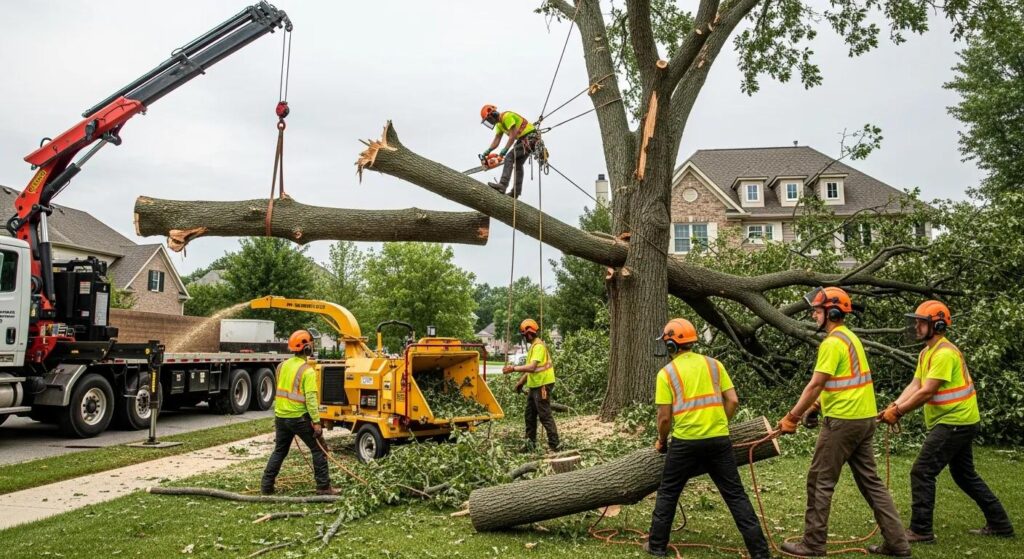
Emergency and Professional Storm Damage Tree Repair & Removal Services
Storms can leave trees downed, split, or dangerously unstable — creating hazards for people, homes, and vehicles. Knowing when to act and who to call makes the difference between a quick recovery and ongoing risk. This guide walks through urgent removal timing, how professionals assess storm damage, safety best practices, and the services available to get your property safe again. Read on to learn how to respond safely and efficiently after storm damage.
Immediately after a storm, prioritize human safety, secure the site from passersby, and document visible damage with photos from multiple angles. These initial steps protect people and provide the clear records many insurers request. Where access is safe, take notes about the location and approximate size of damaged trees to share with responding crews.
How quickly should emergency tree removal be performed after a storm?
Emergency tree removal is time‑sensitive. In most cases, removal should happen within 24–48 hours after a storm when trees pose an immediate threat to life or property. The exact timing depends on the extent of damage and hazards present — fallen limbs near structures, split trunks, or trees leaning toward homes need prompt attention. Fast action reduces the chance of secondary damage and helps your property recover sooner.
Identifying hazardous and fallen trees needing immediate removal
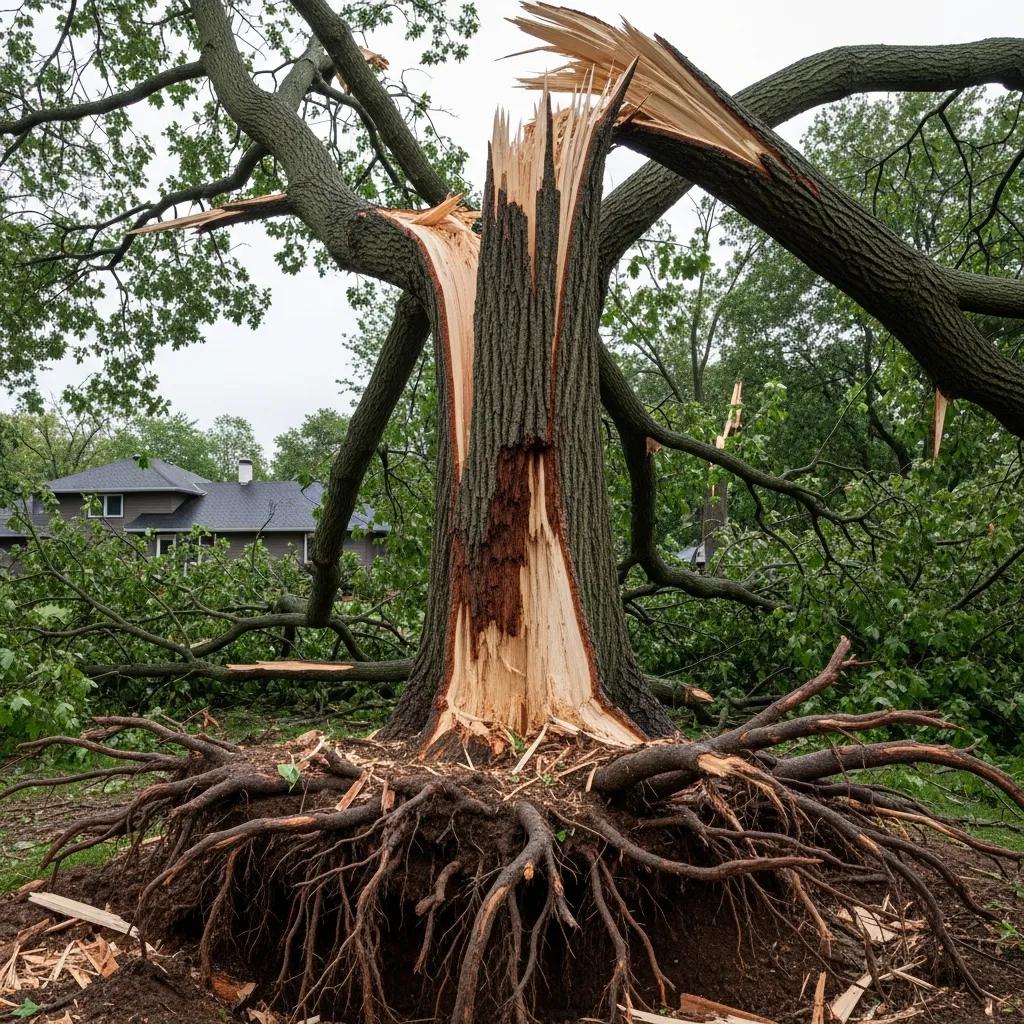
Spotting trees that need immediate removal keeps people safe and prevents further loss. Watch for these clear warning signs:
- Visible damage: Large broken limbs, deep trunk cracks, or a tree suddenly leaning where it wasn’t before.
- Root damage: Trees that are partially uprooted or have exposed, torn roots are unstable and can fall without warning.
- Decay or disease: Cavities, fungal growth, or extensive rot weaken a tree’s structure and raise the risk of failure.
Early recognition of these signs lets you prioritize the most dangerous trees for removal. When prioritizing, consider the tree’s size, the presence of targets beneath (homes, vehicles, utilities), and whether the tree is blocking access for emergency services. Prioritizing by likelihood of failure and potential consequence helps crews use their time most effectively.
What are the key steps in storm damage tree assessment and safety protocols?
A methodical assessment keeps responders safe and ensures the right solution. Typical steps include:
- Initial inspection: A visual sweep of the property to flag hazards and unsafe areas.
- Safety setup: Use PPE (helmets, eye protection, gloves) and secure the work zone before any cutting begins.
- Professional evaluation: Certified arborists assess structural integrity and recommend removal, pruning, or monitoring.
Following industry standards and using accredited professionals helps reduce risk during both assessment and removal. Assessors commonly mark hazardous trees with flagging or spray paint, photograph critical failure points, and prepare brief notes that guide crews and support insurance claims.
ISA Certified Arborist Qualifications for Storm Response
Recommendation: storm response should be led by an ISA Certified Arborist or someone with ISA credentials that exceed the Certified Arborist level.
Using certified professionals means assessments are informed by recognized training and best practices, which improves safety and outcomes. Ask providers about credentials, proof of insurance, and examples of similar storm‑response work they have completed in the past.
How to assess tree damage and risks after severe weather
Assessing damage after severe weather requires a careful look at the tree and its surroundings. Key techniques include:
- Visual inspection: Scan for split limbs, missing bark, and new lean angles.
- Structural check: Examine the trunk and root flare for cracks, cavities, or soil heave that indicate instability.
- Risk evaluation: Consider proximity to buildings, vehicles, people, and power lines when deciding on removal urgency.
Combining these checks helps determine whether a tree can be repaired or must be removed for safety. When in doubt, note the concern and ask for a formal arborist evaluation; many potential hazards become clearer with experienced eyes and simple tools like inclinometers or mallet taps to detect internal decay.
Safety guidelines for storm debris cleanup and hazardous tree handling
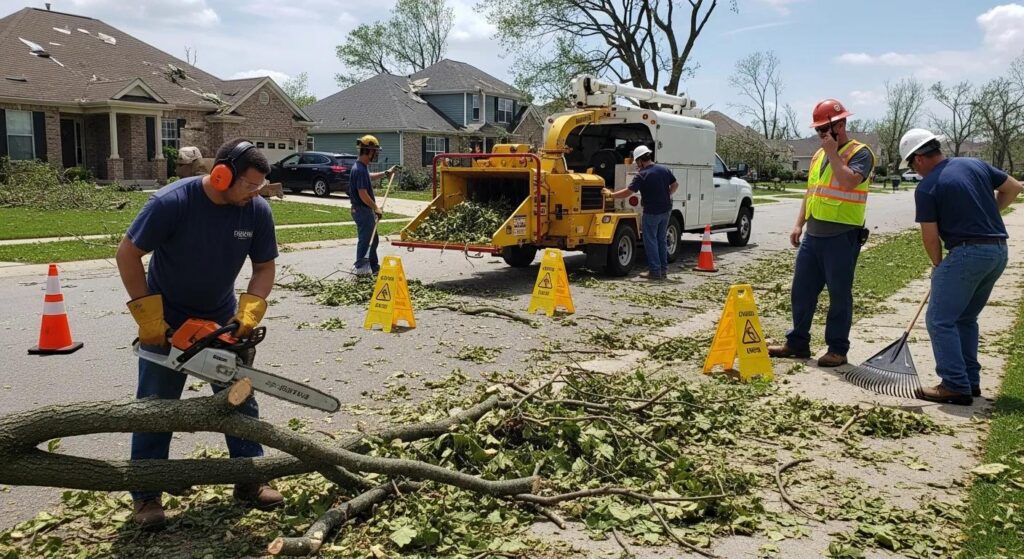
When cleaning up storm debris, safety must come first. Follow these essential practices:
- Wear PPE: Helmets, eye protection, heavy gloves, and sturdy footwear are required when handling debris.
- Avoid electrical hazards: Never touch downed power lines — report them to the utility company and keep everyone back.
- Work with a partner: Large limbs and unstable trees should never be handled alone — use teams trained in safe rigging and removal.
Adhering to these rules significantly lowers the chance of serious injury during cleanup. In addition to personal protective gear, crews typically use cones, barricades, and flaggers when work occurs near roads. Clear signage and controlled access protect homeowners and neighbors while work is underway.
Historical incident reviews make clear how dangerous arboriculture work can be without proper training and controls. Training, pre‑job briefings, and adherence to rescue plans are essential on every job that involves height, heavy lifts, or proximity to utilities.
Arboricultural Safety: Hazards & Incident Review
Review findings highlight the most common fatal incidents in tree work — climber falls, workers struck by falling trees or branches, and electrocutions — underscoring the need for rigorous safety training and procedures.
Which emergency tree removal and storm debris cleanup services are available in Lansing, East Lansing, and Mason MI?
Residents in Lansing, East Lansing, and Mason, MI can typically access a range of emergency and cleanup services, such as:
- 24/7 emergency response: Teams that mobilize immediately to secure dangerous trees.
- Storm debris removal: Full clearing of limbs, branches, and wood from yards and driveways.
- Hazard assessments: Professional evaluations to identify trees that pose ongoing risks.
Contacting local providers quickly helps ensure a safe, timely resolution after a storm. Many local contractors coordinate with utilities and municipal public works to prioritize downed trees that affect power or public roads, and some towns maintain published emergency contacts for larger events.
Overview of professional tree removal, pruning, and logging services
Professional crews bring experience, tools, and safety systems to storm recovery. Common services include:
- Expert assessments: Arborists diagnose structural issues and recommend the right course of action.
- Safe removal: Trained teams use rigging, cranes, and controlled cuts to protect people and property.
- Efficient cleanup: Specialized equipment speeds debris removal and site restoration.
Hiring professionals protects your property and helps preserve the health of the trees you keep. Reputable companies typically provide itemized estimates that separate labor, equipment, disposal, and any required permits so you can compare quotes transparently.
Storm cleanup techniques and equipment used for efficient removal
Efficient storm cleanup relies on the right tools and techniques. Common methods include:
- Chainsaws: For breaking down large limbs and trunks into manageable pieces.
- Cranes: To lift and lower heavy trees or large sections from difficult or confined locations.
- Drones: For aerial damage surveys that inform safe removal plans.
Combining skilled crews with appropriate equipment speeds recovery and lowers risk. Additional onsite gear commonly includes chippers to process branches into biomass, stump grinders for hazard removal, winches for controlled lowering, and trucks or roll‑offs for hauling debris away efficiently.
How can insurance and cost considerations affect storm damage tree removal?
Insurance and cost play a big role in choosing removal options. Important points to keep in mind:
- Insurance coverage: Many homeowner policies cover removal when trees damage insured structures — review your policy to understand limits and exclusions.
- Cost drivers: Size, location (near power lines or structures), and job complexity affect price.
- Claims process: Proper documentation and timely contact with your insurer improve the chance of reimbursement.
Being informed about coverage and costs helps you plan and avoid surprises after a storm. When obtaining estimates, request a written scope and ask whether emergency stabilization (bracing, temporary removal of limbs) is included or billed separately.
Legal disputes over tree damage have become more common as extreme weather events increase and communities adopt stricter tree protections.
Legal Aspects of Storm & Hurricane Tree Damage
Legal conflicts related to trees — from storm damage to overhanging branches and root encroachment — have risen in part because of more extreme weather and denser development, increasing the frequency of liability questions and local regulations.
Understanding insurance coverage for storm damage tree removal costs
Insurance for tree removal varies widely. When reviewing your coverage, consider:
- Coverage types: Some policies pay full removal costs if the tree damages an insured structure; others limit coverage to specific scenarios.
- Documentation: Photos, professional assessments, and receipts support claims.
- Exclusions: Look for policy language that could deny coverage, such as pre‑existing decay or routine maintenance issues.
Clear documentation and early communication with your insurer simplify the claims process. Keep copies of every estimate and receipt, and ask your contractor to include before‑and‑after photos on invoices to strengthen the claim file.
Typical pricing and cost factors for emergency tree services
Emergency service prices depend on several factors:
- Tree size: Larger trees require more labor, equipment, and time.
- Location: Trees close to buildings, fences, or power lines need extra precautions that raise costs.
- Service urgency: Emergency callouts and after‑hours work typically carry a premium.
Request multiple estimates and confirm what each quote includes to compare fairly. Also ask about disposal options — some providers chip and haul, some offer wood removal at extra cost, and others leave cut material for homeowner reuse at a lower price.
What preventive tree pruning and maintenance can reduce storm damage risks?
Preventive maintenance reduces storm damage and long‑term costs. Effective practices include:
- Regular inspections: Spot disease, structural weakness, or root problems early.
- Correct pruning: Targeted pruning removes risky limbs and improves wind resistance.
- Scheduled care: A maintenance calendar with a certified arborist helps trees stay healthy and resilient.
Investing in preventive care pays off by lowering the chance of emergency removals later. Schedule structural pruning during the appropriate seasonal window for your species, and focus on young trees to establish strong scaffold limbs that resist future storm stress.
Benefits of storm tree pruning services to minimize future hazards
Storm‑focused pruning delivers clear benefits:
- Less hazard risk: Removing weak or dead branches reduces what can fall during the next storm.
- Improved tree health: Proper cuts encourage healthy growth and structural balance.
- Long‑term savings: Routine pruning can prevent costly emergency removals down the road.
Proactive pruning keeps both people and property safer over time. Discuss a multi‑year maintenance plan with your arborist to balance cost and tree health, especially for larger properties with many specimens.
Recommended maintenance schedules and techniques post-storm
After a storm, follow a simple recovery plan:
- Immediate assessment: Check all trees for fresh damage and prioritize urgent risks.
- Targeted pruning: Remove broken or hazardous limbs to reduce stress and disease risk.
- Ongoing monitoring: Watch trees for delayed decline or pest issues in the weeks and months after the event.
A structured post‑storm routine supports faster, healthier recovery for surviving trees. Keep a seasonal log and revisit higher‑risk specimens three to six months after the event to catch slow‑developing problems.
What equipment and modern techniques are used in storm damage tree repair and removal?
Modern storm response blends tried‑and‑true tools with newer technology. Common items include:
- Chainsaws: For precise, controlled cutting during removal and pruning.
- Cranes: To lift heavy sections where ground access is limited or unsafe.
- Drones: For aerial inspection and planning in complex or hazardous sites.
Using the right mix of tools improves safety and speeds cleanup work. Crews also rely on mobile chippers, winches, rigging hardware, and specialized trailers to move debris efficiently and safely offsite.
Common tools like chainsaws, cranes, and drones for damage assessment
These tools are standard for assessment and removal:
- Chainsaws: Efficient for breaking down fallen limbs and trunks.
- Cranes: Allow precise removal of large trees near structures.
- Drones: Provide a bird’s‑eye view to identify hazards not visible from the ground.
When combined with trained crews, these tools help teams work more safely and accurately. Proper maintenance of that equipment and pre‑job checks reduce the chance of delays or failures during complex lifts.
Innovations in storm cleanup and tree removal technology
Recent advances are changing how crews respond to storm damage:
- Automated equipment: Emerging robotics and mechanized tools reduce manual risk.
- Improved protective gear: New materials and designs boost worker safety in hazardous tasks.
- Data and analytics: Predictive tools help plan responses and prioritize resources before and after storms.
These developments are improving both safety and efficiency in the field. Over time, better data and equipment planning reduce response time and help communities recover faster after widespread events.
How to handle insurance claims and FAQs related to storm damage tree removal?
When filing claims, stay organized and proactive. Follow these steps:
- Document damage: Photograph everything from multiple angles and keep dated notes.
- Notify your insurer: Report the loss early and provide supporting documentation.
- Stay engaged: Track your claim, respond to requests quickly, and keep copies of all communications.
Clear records and timely follow‑up help the claim move smoothly and increase the chance of coverage. Keep an organized folder — physical or digital — with all correspondence, photos, and receipts so you can respond quickly to adjuster requests.
Frequently Asked Questions
What should I do if a tree falls on my property after a storm?
First, make sure everyone is safe and stay clear of the area. If power lines are involved, contact the utility immediately and keep a safe distance. Photograph the damage for insurance, then call a professional tree removal service to assess and remove the tree safely. If your home or other structures were damaged, notify your insurance company right away to start the claims process.
How can I prevent storm damage to my trees in the future?
Prevention starts with routine care: schedule regular inspections by a certified arborist, remove dead or weak branches, and use proper pruning to improve structure. Planting wind‑resistant species and maintaining soil health also helps. A proactive maintenance plan with a trusted arborist reduces the chance of severe storm damage.
What are the signs that a tree may need to be removed before a storm?
Watch for major trunk cracks, a pronounced lean that’s new or increasing, exposed or torn roots, large cavities, or extensive fungal growth. Any of these signs can indicate a high risk of failure during severe weather. Have a certified arborist evaluate suspect trees before a storm arrives.
Are there specific regulations for tree removal in my area?
Many municipalities have rules about removing trees, especially large, street, or protected specimens. Permits may be required for removal in certain zones. Check with your local city or county office to understand the rules and avoid fines or delays.
How can I choose a reliable tree removal service?
Look for licensed, insured companies that employ certified arborists. Read reviews, ask for references, and request detailed written estimates that explain scope, safety measures, and cleanup. A reputable provider will be transparent about pricing, permits, and their safety protocols.
What should I include in my insurance claim for storm damage tree removal?
Include clear photographs, a written description of the incident and damage, any professional assessments or invoices, and receipts for emergency work. Keep a log of calls and contacts with your insurer. Complete documentation speeds up processing and supports your claim.
What are the long-term effects of storm damage on trees?
Tree recovery varies: some recover fully with proper care, while others suffer from reduced growth, increased pest or disease pressure, or structural weaknesses that make future failure more likely. Regular follow‑up care and monitoring are important to support long‑term recovery.
Step-by-step guidance for filing tree damage insurance claims
Follow these steps to file a clear, supported claim:
- Gather documentation: Photos, dates, and a copy of your policy.
- Contact your insurer: Report the damage and provide the documentation.
- Follow up: Keep records of conversations and submit any additional information quickly.
Staying organized and responsive helps move your claim toward a timely resolution. If the insurer requests an on‑site inspection, be ready to provide the contractor estimate and any prior tree care records that demonstrate maintenance history.
What recent trends and local storm damage statistics impact tree repair and removal services?
Recent trends show stronger, more frequent storms in many areas, including Michigan, which affects service demand and response strategies. Key impacts include:
- Higher storm frequency: More frequent severe weather increases the number of damaged trees.
- Greater service demand: Providers face surges in emergency calls after major events.
- Local effects: Communities need improved preparedness and faster coordination to manage larger volumes of debris.
Understanding these trends helps homeowners and municipalities prepare and respond more effectively. Planning and stocking emergency contracts in advance can reduce response time when crews are stretched thin after widespread events.
Increased storm frequency and its effects on tree damage in Michigan
Michigan has seen an uptick in damaging storm events, which has these consequences:
- Greater exposure: More storms raise the probability of tree failures across communities.
- Service strain: Arborists and crews face higher workloads during peak storm seasons.
- Preparedness needs: Local planning and proactive tree care are increasingly important to limit damage.
Being proactive with maintenance and community coordination reduces risks and speeds recovery. Neighborhood programs that map older or high‑risk trees and share that information with public works can help prioritize inspections and funds where they are most needed.
Case studies and local data from 2025-2026 on storm damage response
Recent case studies from 2025–2026 highlight effective approaches to storm response:
- Proactive maintenance: Areas that kept up regular tree care saw less catastrophic damage.
- Coordinated resources: Localities with clear emergency plans and mutual‑aid agreements cleared debris faster.
- Public awareness: Communities that educated residents about tree health experienced fewer preventable incidents.
These examples show the value of planning, funding, and public education in reducing storm impacts. Communities that invest in outreach and clear reporting channels usually see more orderly recoveries and fewer disputes over responsibility.
Conclusion
Quick, professional action after a storm protects people and property. Certified arborists and trained crews provide safe assessments, targeted pruning, and controlled removals that reduce immediate hazards and support long‑term tree health. If storm damage has affected your property, contact our team — we’ll help prioritize risks, work with your insurer, and restore safety as efficiently as possible.